Subvención Global ID #185
Objetivo del Proyecto:
Strengthening the capacities of young people, teachers, families, and members of the educational community to contribute to building a more peaceful society.
The project aims to raise awareness about the factors that cause conflict and foster personal and collective transformation processes that address its root causes. To this end, seven public schools in the department of Quindío will be supported—six in the municipality of La Tebaida and one in the municipality of Pijao—strengthening their capacity to promote a culture of peace both within the school communities and in their surrounding areas.
País / Ubicación: Colombia (La Tebaida Quindío)
Área de Interés: Paz y Prevención de Conflictos
Año de Implementación: 2027
Presupuesto Total del Proyecto:
Fondeo Solicitado (Lo que falta):
Diseño del Proyecto:
This support will be provided through the implementation of the Human-Centered Education (HCE) methodology to promote holistic development, well-being, and peacebuilding, focusing on the individual and their relationships with others. This will be achieved through six components: leadership time, cognitive time, emotional time, caring for the caregiver, peace circles with parents and the community, and a train-the-trainer program. In this way, the project aims not only to address specific conflict situations but also to transform the personal, family, and community conditions that may be exacerbating conflict.
Beneficiarios:
The project will be implemented in seven public schools in the department of Quindío, six located in the municipality of La Tebaida and one in the municipality of Pijao, expanding and strengthening the work begun during the first phase.
• Direct beneficiaries: 225 students from the participating schools, 32 teachers, and 300 parents and members of the surrounding community.
• Indirect beneficiaries: It is estimated that the program will indirectly benefit approximately 450 members of the school community and 150 community stakeholders, including family members, friends, neighbors, caregivers, and other people close to the participants, who will be able to benefit from the positive changes generated by the process in the young people.
In total, it is estimated that approximately 1,157 people will benefit, including the direct participants of the project and other young people, parents, and members of the communities linked to the seven schools.
Sostenibilidad:
Once the financial contribution received for this phase is completed, the project can continue operating based on the capacities, knowledge, and tools established in the participating educational institutions and communities. The sustainability strategy aims to progressively transform young people, teachers, parents, members of the educational community, and the surrounding community into peace multipliers and individuals with greater capacity to prevent and resolve conflicts peacefully.
An additional element of this continuity will be the "Train the Trainers" process, through which a group of teachers will delve deeper into the Human-Centered Education methodology and acquire the skills to later share and develop this knowledge with other teachers. In this way, peace multipliers will be trained with methodological foundations to continue implementing the methodology and contribute to its expansion to other educational institutions.
The experience accumulated in the five educational institutions (Eduser for Peace Phase I) will be of great support for the program's sustainability. These institutions have expressed their support for the process, and it constitutes a benchmark for its continuation and expansion.
Additionally, the NGO Guerrand Hermes Foundation for Peace will maintain its connection with the project, providing guidance and support for its development and future. Starting in 2027, GHFP will conduct a two-year research project with the Minuto de Dios University in two of the educational institutions with which it has worked. This research will focus on strengthening the implementation of the HCE methodology and identifying and developing the necessary materials, booklets, videos, and teaching aids for its expansion. This process will lay the groundwork for progressively scaling the methodology to 20 educational institutions.
Finally, the methodology has a solid theoretical and academic foundation, supported by international publications and years of implementation experience. The qualitative and quantitative results obtained in previous experiences demonstrate its potential impact and provide a basis for securing new support and partnerships to further expand its implementation.
Colaboradores:
The ONG Guerrand Hermes Foundation for Peace (GHFP), an international organization based in Colombia since 2017, supports the project and has extensive experience in research and training for peace and human well-being.
GHFP maintains cooperative ties with UNESCO and is developing, together with the University of Quindío and the Minuto de Dios University, a Research and Training Center for Peace and Human Well-being. These institutions are also working on a proposal to promote Human-Centered Education as a tool for peacebuilding.
Monitoreo y Evaluación:
Monitoring: Monitoring will be conducted by the project leaders and the Rotary Club of Armenia International through monthly reviews of reports submitted by each young person participating in the program. This review will allow for tracking each young person's progress in relation to the program's six components.
• The Self-Perception-Quantitative Assessment survey, developed by the University of Denver, will be administered to each young person at the beginning and end of the program. This tool identifies and measures changes in participants' self-esteem levels, considered a fundamental element for their holistic human development.
• Every six months, progress on the approved indicators will be monitored to evaluate the program's results and changes. These indicators include: the number of direct beneficiaries; the young people's perception of the school's interest in their personal growth; improved self-confidence; greater ease in expressing their feelings; an appreciation of the importance of dialogue as a tool for promoting peace and reducing conflict; and an appreciation of warm and caring treatment as a source of well-being.
• • Review of activities carried out: Evidence of the activities developed by each institution will be reviewed to verify their execution, compliance, and progress in accordance with the program guidelines.
• Monitoring of observed results: An evaluation of the learning and results achieved will be conducted based on reports prepared by the program's psychologists and tutors. Impact stories will also be documented to demonstrate the changes and transformations generated in the lives of the young people. Additionally, ongoing monitoring of identified challenges and risks will be carried out to establish timely actions for their addressing and mitigation.
• Data collection: This will be conducted monthly, compiling and organizing the information generated during the implementation of the program activities.
• Review of indicators: This will be carried out quarterly to analyze progress and verify compliance with the established indicators. • Consolidation of project results: This will be carried out every six months, integrating the information collected and analyzed to evaluate the results, progress, achievements, and areas for improvement during project implementation.
• Final evaluation: At the end of project implementation, surveys and personalized interviews will be conducted with various stakeholders involved in the project to gather their perceptions and assess the results achieved. This information, along with the other defined instruments and measurement factors, will allow for a comprehensive evaluation and the preparation of a final report on the fulfillment of objectives, the results obtained, and the main lessons learned from the project.
Club: Club Rotario Armenia international
Distrito: D. 4281
Contacto: Trevor Edwin Birt
Email: trevoredwinbirt@hotmail.com
Club: Save our planet
Distrito: D. 5330
Contacto: Bricia Elawar
Email: bricialam@hotmail.com
Feria: Feria de Proyectos Colombia 2027
Estatus Actual: Pendiente Cadre
Fecha de Captura: 2026-08-25 13:26
Dueño: Maria teresa Silva (ghfp.col@gmail.com)
Contacto del Aprobador (Revisión)
Aprobador : PENDIENTE
Email: N/A
ID Usuario Cadre: N/A
Información TRF (Administrativa)
Código de Subvención TRF (GG ID): PENDIENTE
TRF Staff: PENDIENTE (N/A)
In the municipalities of La Tebaida and Pijao, in the department of Quindío, it is evident that current education is instrumentalized and its main objective is the accumulation of knowledge, rather than human development. Therefore, the activities that respond to these objectives do not take into account the interests and needs of young people. To achieve results, the current system exerts pressure through exams. This demotivates young people who find no connection to what they need. Current education is focused on preparing young people for adulthood, without considering that they should experience adolescence fully and naturally.
Because:
• The current education system needs to understand that the education of the individual takes priority over any other type of learning.
• Because education is much more than accumulating knowledge.
• Because educational priorities should focus on the interests and needs of young people.
• Because it is necessary to listen to young people.
• Because education is needed that promotes the integral development of the human being, fosters well-being, and contributes to building peace.
• Because a connection is needed between the individual's inner peace and their relationships with others, with peace being conceived as an integral part of human development.
The community also identified needs related to socioeconomic conditions, including difficulties accessing stable employment, generating sufficient income, improving quality of life, and having access to timely and adequate health services. These conditions directly influence emotional, family, and community well-being, generating worries, uncertainties, and limitations for people's holistic development.
Davida Association: Accompaniment and support related to health and patients.
Amanecer Foundation: Works with children and families in environmental and recreational programs.
Funde Afro Quindío: Works for the social, economic, cultural, environmental, and political rights of Afro-descendant communities.
ICDP: Works to improve the relationship between caregivers and children.
House of Culture: A space for dance, music, theater, literature, and visual arts; it strengthens expression and identity.
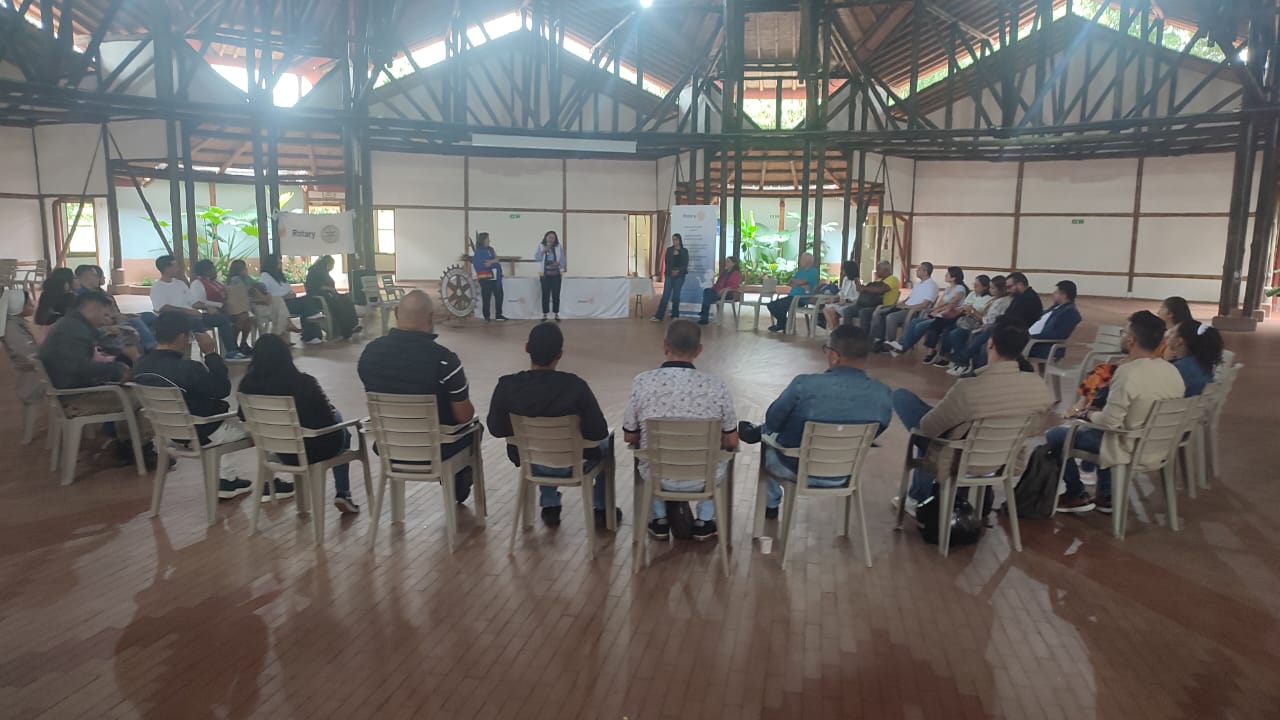
The community needs assessment was conducted by:
María Teresa Silva, Rotary leader of the project
Claudia Milena González, project sub-coordinator and project psychological advisor
Luisa Fernanda Montoya, project psychological advisor (GHFP Foundation)
Ayda Brigitte Ramírez, re-educative psychopedagogue (GHFP Foundation)
Two methods were used to collect the information:
1. Survey
2. Community meeting
The communities assessed were:
Barrio Obrero and Salvador Arango in La Tebaida / Method used: Community meeting
Tebaida Community, Youth between 14 and 18 years old / Method used: Survey
Amanecer / Method used: Community meeting
Teachers from La Tebaida and Pijao / Method used: Survey
The project will be carried out in the department of Quindío in 6 public educational institutions in La Tebaida and 1 in the municipality of Pijao.
La Tebaida is a municipality located in the eastern part of the department of Quindío, with a population of 35,189 inhabitants according to DANE (year 2024). By demographic capacity, it ranks 4th in the department, with 12,000 being young people. Its economy is based on agriculture and commerce. It is the top producer of passion fruit and also has many plantain and citrus crops. It has a large number of micro-enterprises. It consists of 61 urban neighborhoods and 6 rural districts (veredas). There are 7 official educational institutions, no private schools, and no higher education offering. It has basic public services and 1 hospital. Transportation to rural districts is deficient.
The police force is scarce, with 8 police officers and 3 for childhood and adolescence. It is classified as an early alert municipality due to high rates of family breakdown, micro-trafficking, early pregnancies, a high unemployment rate, psychoactive substance use, few opportunities for youth, and it is also a receiving area for victims of the armed conflict.
Pijao is a municipality located in the department of Quindío with a DANE population for 2025 of approximately 5,351 inhabitants, of which 1,096 are young people between 15 and 29 years old. Pijao's economy is closely linked to agricultural activities, especially coffee cultivation and production. The main social needs identified are low population and territorial dispersion, limited job and educational opportunities for youth, and a lack of motivation to improve and develop a life of fulfillment.
Beneficiaries will include 225 young people, 32 teachers, and 300 parents and members of the adjacent community from the 7 educational centers.
It is evident that Colombia is undergoing a process of political polarization between far-right factions and progressive factions that affect peace, increase conflict, and lead to a lack of dialogue, with individual interests prevailing.
Currently, these needs are being addressed through the implementation of the Eduser for Peace 1 project, through individual sessions and accompaniment spaces with young people from 5 educational institutions in the department of Quindío. The project seeks to respond to their psychological and socio-emotional needs, strengthening aspects such as self-esteem, affection, and emotional well-being. Likewise, young people are accompanied in building healthy interpersonal relationships, strengthening ethics and values, and developing skills such as tolerance, understanding, self-love, and self-care.
The project also works with teachers, providing them with tools that allow them to develop greater flexibility and understanding regarding the needs of young people. Topics related to social taboos, communication, respect for differences, and peaceful conflict resolution are addressed, seeking to strengthen their abilities to accompany students in a closer and more empathetic manner.
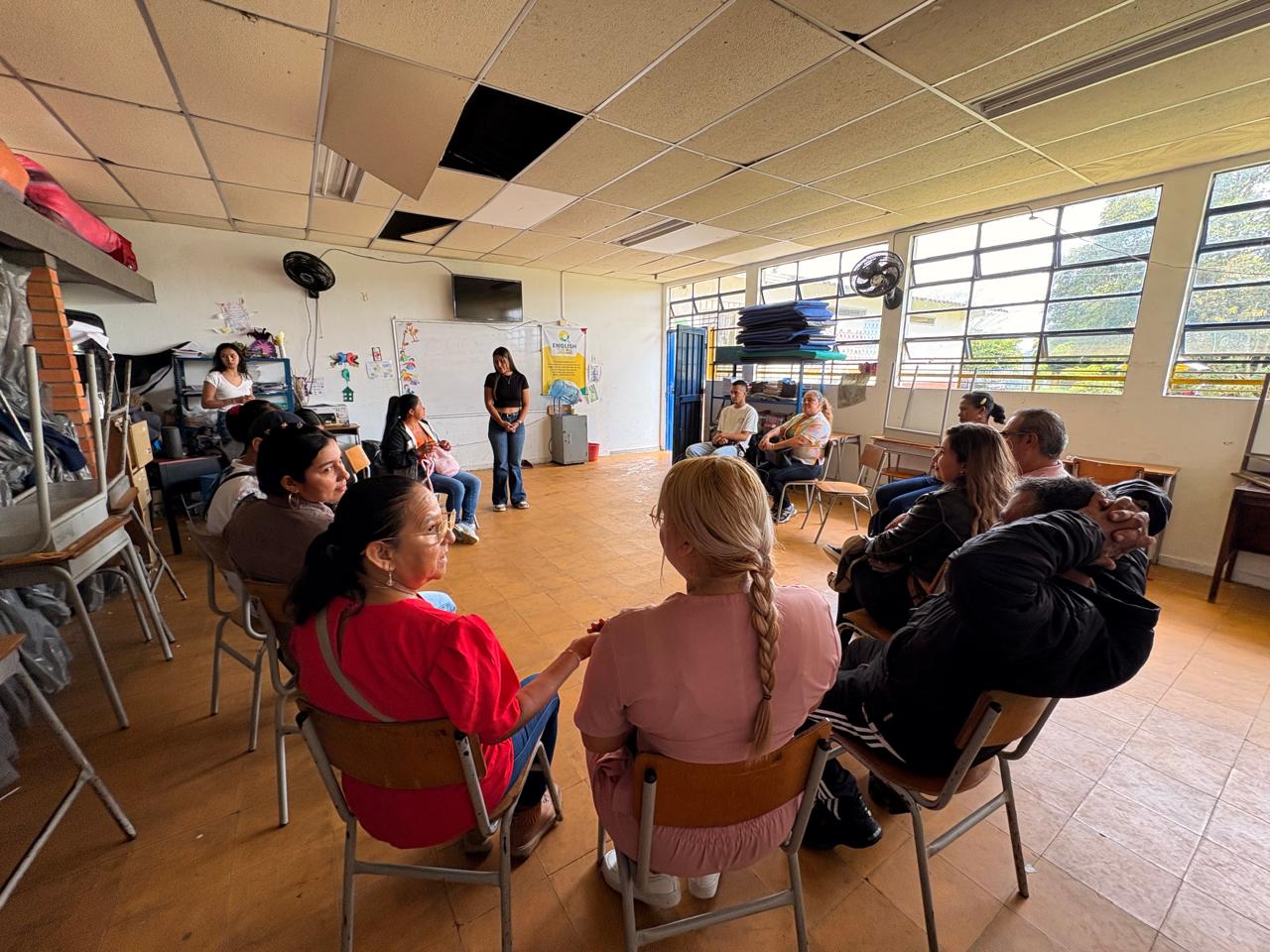
Similarly, families are recognized as a fundamental component of the process. Therefore, spaces for listening and accompaniment are generated, aimed at strengthening values, communication, warm and affectionate treatment, as well as strategies to improve the way parents and caregivers relate to and communicate with young people. It also seeks to motivate greater family participation in their children's development processes and provide them with support for peaceful conflict resolution.
This is achieved through the following basic processes:
• Individual sessions between a tutor-teacher and a student (Direction Time)
• Group sessions accompanied by a facilitator-teacher, to awaken the student's interest in developing their own intelligence (Cognitive Time)
• Group sessions (of 10 young people per group) accompanied by a facilitator-psychologist to learn about their emotions, grow in solidarity and listening, and so that step-by-step they are capable of expressing their feelings in a safe and trusting space (Emotional Time)
• Sessions for the improved well-being of teachers
• Peace circles with parents
• Peace circles with communities
In these communities, there is a conflict scenario predominantly associated with organized crime and urban security. Factors exist that can affect coexistence, weaken institutional trust, and generate risks for territorial peacebuilding.
The social dynamics of La Tebaida combine an urban and rural population linked to commerce, services, tourism, and agro-industrial activities, with a strategic location along Quindío's road corridor. This location can also favor the mobility of illicit markets and criminal structures.
The main recent precedent is Early Warning 001 of 2024 from the Ombudsman's Office (Defensoría del Pueblo), which explicitly included La Tebaida among five municipalities in Quindío where the presence and interference of organized crime structures such as La Cordillera, Los Flacos, and La Oficina were identified. The warning alerts against disputes over illicit revenues, particularly related to drug trafficking and other criminal economies.
An especially concerning aspect is the impact on children, adolescents, and youth. The Ombudsman's Office noted that the population between 13 and 29 years old is exposed to processes of instrumentalization for activities such as drug dealing, weapons transport, and participation in homicides.
Main risks to peacebuilding:
• Recruitment/Capture of youth: The instrumentalization of adolescents and youth by criminal networks is one of the most serious risks pointed out by the Ombudsman's Office.
• Displacement and fracturing of the social fabric: The forced departure of individuals and the arrival of victim populations can generate additional social needs and tensions over employment, housing, and services.
• Intergenerational reproduction of violence: The combination of exclusion, substance consumption, criminal recruitment, and lack of opportunities can turn violence into a life trajectory for some young people.
Local institutional source: The Municipal Mayor's Office (Alcaldía Municipal) and the La Tebaida Police Station are local institutional references to cross-check information regarding coexistence, security, and public response.
The community has important strengths to move forward in peacebuilding, notably unity, commitment, and the willingness of its members to work for collective well-being. Significant progress is also recognized in the commitment of teachers and the educational community, who are open to reflection and understand that education has shortcomings that need improvement.
Principals of educational institutions are also aware of the needs and are opening spaces for programs aimed at solving the deficiencies of the educational system.
Strengths and resources also include recreational areas for families, cultural centers, and improvements in public services. The warm attitude of citizens, a culture of simplicity and willingness to serve, support from community action boards (Juntas de Acción Comunal), and commercial development in the sector are also evident.
The Secretariat of Education of the Department of Quindío is providing training to guidance psychologists at educational institutions and has invited the Eduser for Peace Phase II project, along with its strategic ally GHFP, to provide training to all 52 guidance counselors across educational institutions in the department of Quindío. The contents of the training focus on a new perspective on peace originating from human well-being. Likewise, the Departmental Secretariat of Education has conducted an analysis of the coexistence needs across all educational institutions.
The Eduser for Peace Phase II program will support this by offering alternative pathways and strengthening the capacities of guidance counselors, who are responsible for handling conflict resolution in educational institutions. That is, the Eduser for Peace Phase II Project is scaling its impact from 7 institutions to the remaining of the 52 in the department.
The University of Quindío, through the Politia research group in alliance with GHFP (strategic ally of the program), is formulating a proposal to map out the different research projects and works that foundations and institutions have carried out regarding positive peace in the Department of Quindío. This inventory will help clarify what has been done, how it has been addressed, and what is missing. These results will be essential to guide future research on positive peace.
Minuto de Dios University (UNIMINUTO), in alliance with GHFP (strategic ally of the program), is formulating a 2-year research study in two of the educational institutions where Eduser for Peace 1 worked. This study is oriented toward strengthening the implementation of the HCE methodology (Human-Centered Education) and identifying as well as developing materials, workbooks, documents, videos, and other necessary teaching aids for the expansion of the Eduser for Peace Phase II program. This process will allow the development of the system needed to progressively scale the program to an additional 20 educational institutions.
Likewise, UNIMINUTO and GHFP will support Eduser for Peace Phase II in the "Train the Trainers" program, which will train future teachers to support the aforementioned scaling process.
| Fuente | Aporte Club (Cash) | Aporte Distrital (FDD) | Match (80% FDD) + 5% Cash Fee | Total Aportado | |
|---|---|---|---|---|---|
| Club Rotario Armenia international (Cash) | $1,000.00 | - | +$50.00 | $1,000.00 | |
| Distrito (part of) COLOMBIA (4281) (FDD) | - | $2,000.00 | $1,600.00 | $3,600.00 | |
| Save our planet (Cash) | $100.00 | - | +$5.00 | $100.00 | |
| Distrito Internacional USA--(California) (5330) (FDD) | - | $0.00 | $0.00 | $0.00 | |
| TOTALES GENERALES | $1,100.00 | $2,000.00 | $1,600.00 | $4,700.00 |
| Monto Total Solicitado (Egresos) | $86,358.00 |
| Total Financiación Calculada (Ingreso) | $4,700.00 |
| **Inversión Pendiente (Funding Gap)** | $81,658.00 |
| - | - |
| Total 5% Cash Fee (Solo Informativo) | $55.00 |
| Fecha | Acción Realizada Por | Tipo de Cambio | Descripción |
|---|---|---|---|
| 2026-08-31 14:25:11 | Maria teresa Silva | ENVIO_A_APROBACION | La Subvención fue enviada a Aprobación (primer envío o Borrador). Nuevo estado: Pendiente Cadre. |
| 2026-08-31 14:25:11 | Maria teresa Silva | EDICION_DATOS | Actualización de datos principales de la subvención. |
| 2026-08-31 14:23:05 | Maria teresa Silva | EDICION_DATOS | Actualización de datos principales de la subvención. |
| 2026-08-31 14:23:05 | Maria teresa Silva | CARGA_ARCHIVO | Archivo 'OTROS' cargado: ANALISIS NECESIDADES COMUNIDAD EDUSER FASE en inglés.docx |
| 2026-08-31 14:20:35 | Maria teresa Silva | EDICION_DATOS | Actualización de datos principales de la subvención. |
| 2026-08-31 14:17:26 | Maria teresa Silva | EDICION_DATOS | Actualización de datos principales de la subvención. |
| 2026-08-29 08:57:48 | Ricardo Test | EDICION_DATOS | Actualización de datos principales de la subvención. |
| 2026-08-29 08:57:16 | Ricardo Test | EDICION_DATOS | Actualización de datos principales de la subvención. |
| 2026-08-29 08:50:21 | Ricardo Test | EDICION_DATOS | Actualización de datos principales de la subvención. |
| 2026-08-29 08:49:55 | Ricardo Test | EDICION_DATOS | Actualización de datos principales de la subvención. |
| 2026-08-25 13:26:23 | Maria teresa Silva | CREACION_BORRADOR | Se grabo Borrador de la nueva Subvencion |